How to Use Echo Writing in Claude
How to Use Echo Writing in Claude: A Step-by-Step Guide
I started using echo writing when I noticed my AI content felt inconsistent. Some parts were strong, but others drifted away from the main idea. Once I learned this technique, my writing became clearer, more focused, and much easier to read.
In this guide, I’ll show you the exact five-step process I use to implement echo writing in Claude—a technique that helps you reinforce key messages, improve content coherence, and create writing that actually resonates with readers.
What Echo Writing Means in Simple Words
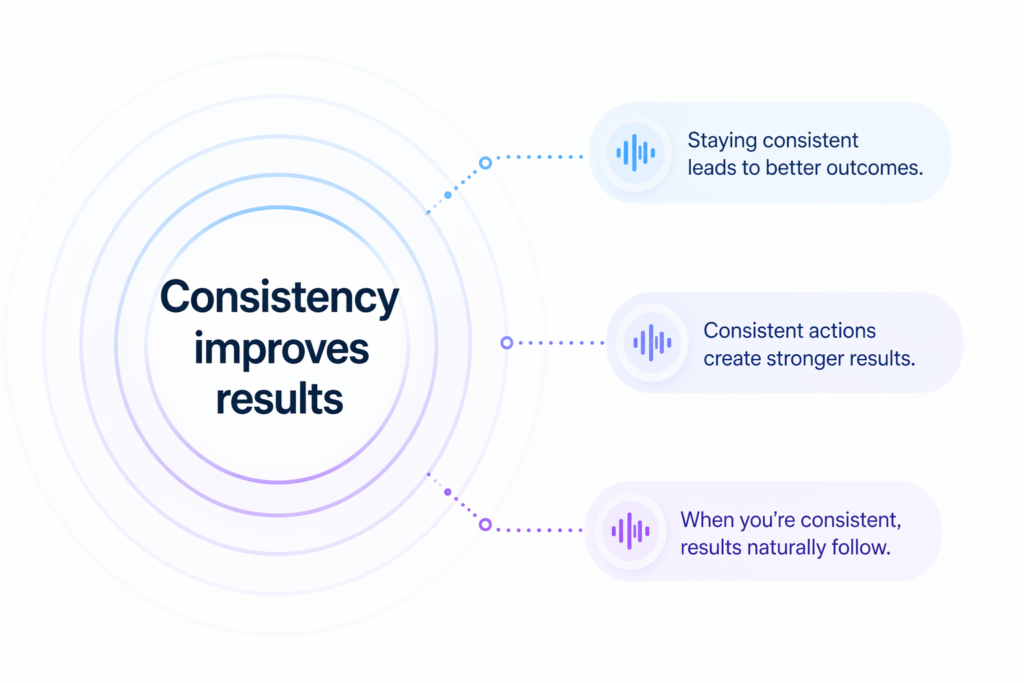
Echo writing means repeating the same idea in different ways throughout your content. It’s a technique that helps you reinforce your message without sounding repetitive.
Rather than repeating sentences verbatim, I restate the core idea using different words so the message stays strong and clear. For anyone learning how to prompt Claude or improve Claude responses, this technique is essential for getting consistent, high-quality output.
Example of Echo Writing in Action
If my main idea is: “Consistency is important in content writing”
I might echo it in these different ways:
- Writing regularly improves your results
- The more consistent you are, the better your content becomes
- Success in writing comes from showing up every day
Same core idea. Different expressions. Natural flow. That’s the essence of echo writing.
Step 1: Choose One Clear Main Idea
Before I write anything in Claude, I decide on one core message—this is the foundation of effective Claude prompt examples and better Claude responses overall. Skip this step, and your content becomes scattered.
My Core Message Formula
Here are example ideas I use as core messages:
- AI tools help save time
- Simple writing works better than complex writing
- Consistency brings long-term results
Once I have identified my core message, everything in the content—every paragraph, example, and explanation—revolves around reinforcing that single idea. This approach keeps your writing cohesive and ensures Claude stays on track throughout the generation process.
Step 2: Tell Claude to Reinforce That Idea
Instead of giving vague, basic prompts, I guide Claude with crystal-clear instructions. This approach to how to prompt Claude effectively ensures you get focused, coherent output.
My Exact Prompt Structure
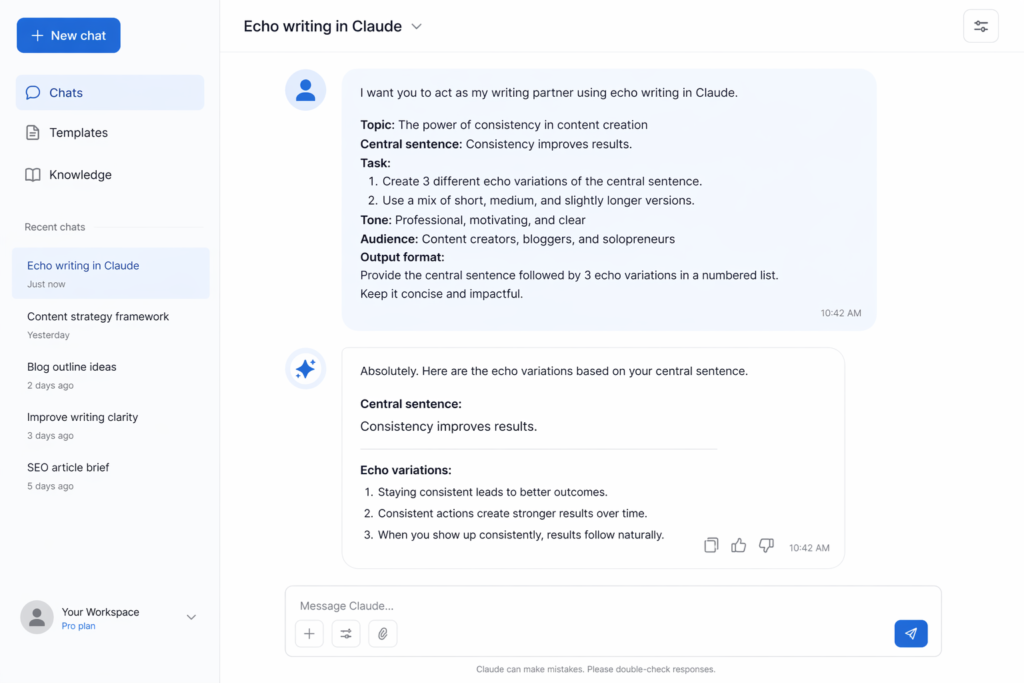
Here’s the specific instruction framework I use:
Write a blog post about echo writing in Claude.
Reinforce the idea that clear repetition improves content quality.
Repeat this idea naturally using different wording.
Avoid redundancy by varying sentence structure and vocabulary.
This small adjustment makes a significant difference in output quality. When you explicitly tell Claude to reinforce an idea, it stops treating each paragraph as independent thoughts and instead starts connecting ideas logically throughout the entire piece. The result is writing that feels cohesive rather than disjointed.
Step 3: Use the Echo First Method
The Echo First Method is my personal quality control process where I ask Claude to restate my request before generating the actual content. This step is invaluable for improving Claude responses and ensuring accuracy.
Here’s exactly how it works:
First, restate my request in your own words.
Then, write the content based on your restatement.
When Claude echoes my request back to me, I can instantly verify if it understood my intention correctly. If I notice a misunderstanding, I clarify before moving forward. This simple check prevents wasted revisions and ensures the output aligns with my actual goal from the first draft.
Why This Works
By asking Claude to demonstrate understanding before generating content, you catch misinterpretations early. It’s like a Claude AI tutorial built into your workflow—you’re teaching the model what you want while it confirms comprehension simultaneously.
Step 4: Keep the Repetition Natural
One mistake I made early on was forcing repetition too aggressively—it sounded robotic and unnatural. I’ve since learned that good echo writing feels like natural emphasis, not mechanical repetition.
Now I follow a simple rule: If it feels repeated when I read it aloud, I rewrite it.
My Three Techniques for Natural Repetition
When implementing Claude writing techniques for echo writing, I focus on these three approaches:
- Changing sentence structure – Vary how you express the idea (statement, question, analogy, example)
- Using synonyms – Replace key words with related terms that carry the same meaning
- Adding small explanations – Build on the core idea with new context or perspective
This approach keeps the content smooth and human. Instead of feeling like you’re being told the same thing repeatedly, readers experience the idea unfolding naturally across different dimensions.
Step 5: Refine the Output Like a Human
I never publish Claude’s output directly; I always review and refine it first. Instead, I treat the generated content as a first draft rather than a finished product. This refinement step is what transforms good Claude responses into great ones.
My Human Refinement Checklist
When reviewing Claude’s output, I evaluate these key aspects:
- ✓ Are ideas repeating too much?
- ✓ Does the content flow naturally from section to section?
- ✓ Are sentences easy to read and understand?
- ✓ Is the tone consistent throughout?
Iterative Prompt Refinement
If I notice issues, I don’t start over—I give Claude specific feedback. For example:
“Make the repetition more subtle”
“Emphasize the main idea stronger in the introduction”
“Simplify the language for beginners”
This back-and-forth dialogue significantly improves the final result. Even Claude AI for beginners users can achieve professional-quality output through strategic revision cycles.
A Real Example: How to Use Echo Writing in Claude in Practice
Let me show you exactly how I apply these five steps in a real writing scenario.
The Challenge: I needed to write content about freelancing discipline for a client.
Basic Output (Before Echo Writing)

“Freelancing requires discipline. You need to stay consistent.”
This version is functional but lacks depth and engagement. The idea appears once and disappears. A reader might miss the core message, and Claude doesn’t know that consistency is the key theme to reinforce.
After Echo Writing (With Strategic Reinforcement)
“Freelancing rewards discipline. When I stay consistent, I see better results over time. In my experience, consistency is what separates beginners from professionals.”
What Changed:
- First sentence: Changed from statement (“requires”) to benefit (“rewards”)—this is more persuasive
- Second sentence: Added personal observation with timeframe (“over time”)—this adds credibility
- Third sentence: Elevated the idea to a universal principle that positions consistency as a professional marker
Now it feels more real and engaging because the reader experiences the idea unfolding across multiple dimensions rather than being told it once.
Mistakes I Avoid While Using Echo Writing
Over time, I’ve noticed a few common pitfalls that significantly reduce content quality. By avoiding these mistakes, you’ll create more effective echo writing in Claude.
Mistake 1: Repeating the Same Sentence Word-for-Word
This makes writing feel boring and unnatural to readers. Instead of copying sentences, I always change the wording and sentence structure. For example:
- ❌ “Consistency matters. Consistency is important. Consistency helps you succeed.”
- ✓ “Consistency matters. When you show up daily, results compound. Professional success comes from reliable effort.”
Mistake 2: Not Giving Clear Instructions to Claude
If I give vague prompts, Claude produces generic content with no clear direction. Clear, specific instructions always lead to better results. Compare these Claude prompt examples:
- ❌ “Write about echo writing.”
- ✓ “Write about echo writing as a Claude technique. Focus on how it improves content cohesion. Use first-person examples and provide Claude prompt examples.”
Mistake 3: Overusing the Technique
Too much repetition can feel forced and annoying. I use echo writing to reinforce and support the main idea, not to dominate the entire content. Balance is key—echo your core message throughout, but leave room for new information and examples.
Why Echo Writing Works So Well
From my experience and testing, echo writing improves content quality in three major, measurable ways:
1. It Keeps the Message Clear From Start to End
When you echo your core idea throughout the content, readers don’t lose sight of your main point. Each paragraph reinforces the central theme, creating coherence across the entire piece. This is especially important for improving Claude responses—when you ask Claude to echo an idea, it maintains focus instead of drifting into tangential points.
2. It Makes Writing More Engaging and Human
Repetition, when done well, creates rhythm and emphasis rather than monotony. Readers feel the idea building across different contexts and examples. This approach to Claude writing techniques makes the content feel like a conversation between writer and reader, not a delivery of information.
3. It Helps Readers Remember the Key Idea
Cognitive research confirms that spaced repetition improves retention. By strategically repeating your core idea in different forms throughout your content, you’re helping readers internalize the message. This is why tutorials and how-to guides benefit so much from echo writing—the repeated reinforcement helps learners remember key concepts longer.
Bonus: SEO Advantage Without Keyword Stuffing
Echo writing also reinforces topical relevance for search engines. When you repeat related concepts and synonymous phrases naturally throughout your content (as opposed to cramming the same keyword repeatedly), you signal expertise and comprehensiveness to Google without triggering keyword stuffing penalties.

My Simple Rule for Echo Writing
I follow one simple rule every time I write with Claude:
“Say the same idea again, but say it better.”
That’s it. That’s the entire principle behind effective echo writing. When you embrace this rule—repeating your core message while continuously improving how you express it—your content naturally feels strong, valuable, and human.
Your Next Step
Now that you understand how to use echo writing in Claude, it’s time to test it yourself. Next time you’re working with Claude:
- Choose your core message
- Give Claude explicit instructions to reinforce that message
- Use the Echo First Method to verify understanding
- Keep your repetition natural and varied
- Refine the output like a human editor would
The more you practice these five steps, the more automatic echo writing becomes. Your Claude responses will improve noticeably, your content will feel more cohesive, and your readers will actually remember what you taught them.
Start with one piece of content today. Notice the difference.